


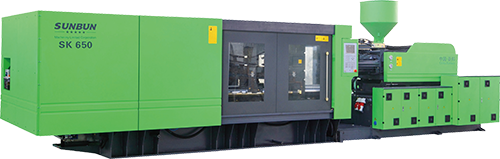
China's Leading Horizontal Injection Molding Machine Manufacturer
Our horizontal range covers center-locking machines from 140T to 2800T, all-electric models, and hybrid servo-hydraulic machines, along with application-specific solutions for PET preforms, PVC pipe fittings, large containers, medical devices, and high-speed cable ties. Whatever you produce, you can source your horizontal injection molding machine from one experienced Chinese manufacturer.

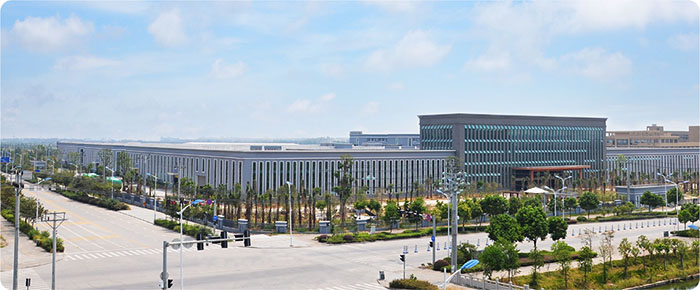
Inside Our Horizontal Injection Molding Machine Factory
Sunbun Machine is backed by the Sunbun Group, a national-level high-tech enterprise with a long history in hydraulic components. We build the machine's hydraulic core on our own technology, machine our key parts on imported equipment, and inspect them before they reach assembly.
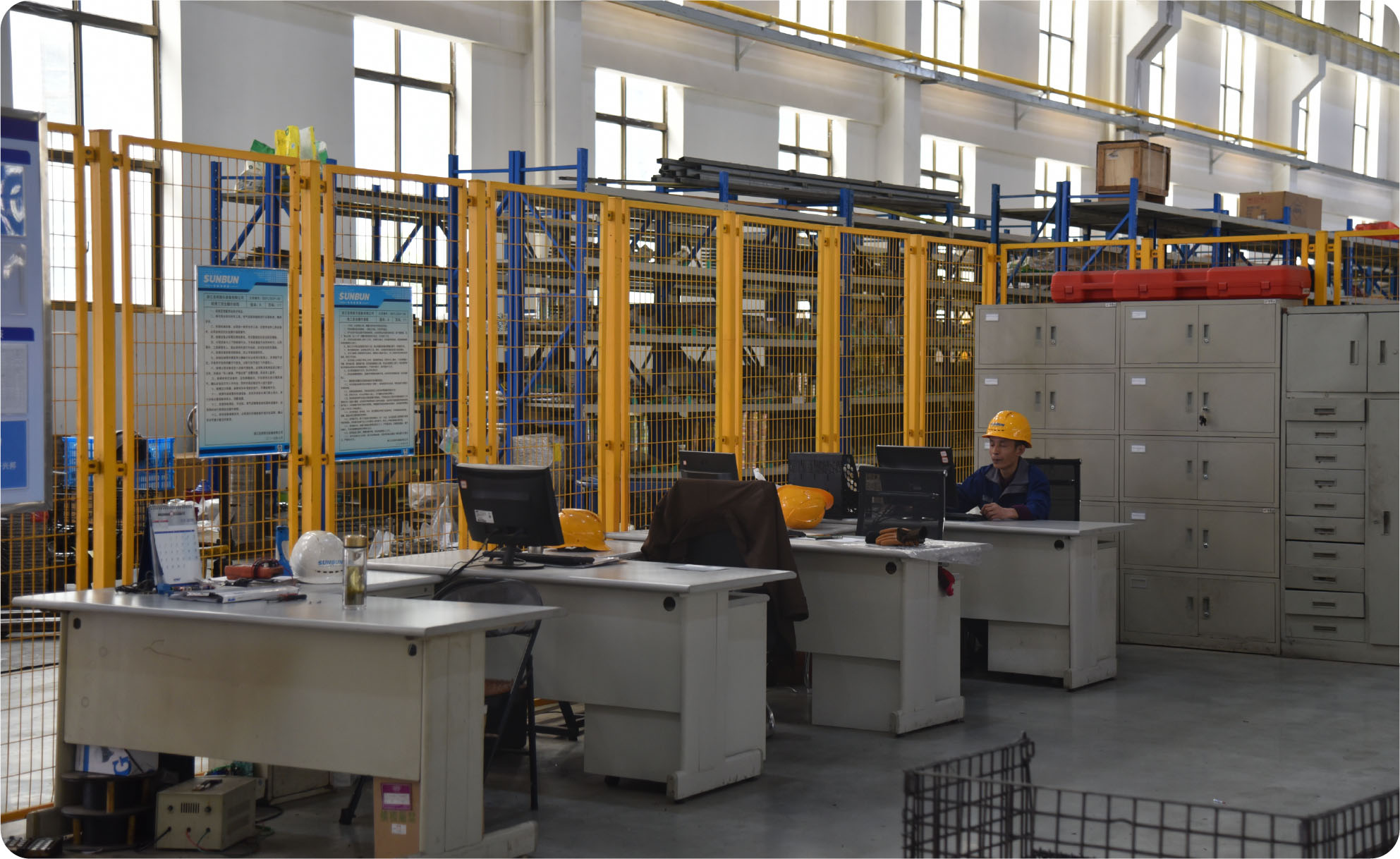
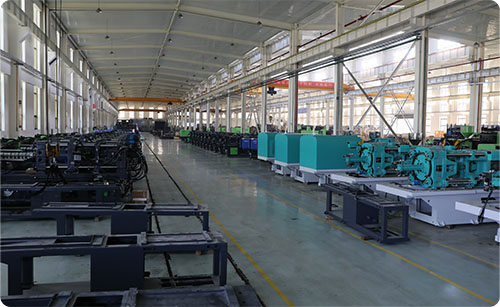
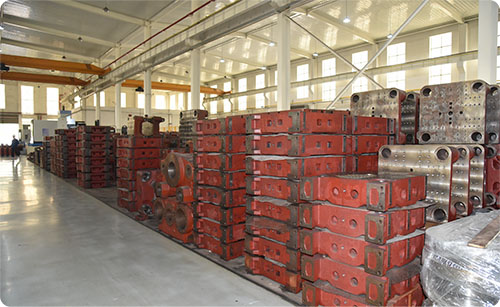
A Hydraulic Specialist Behind Every Machine
Sunbun Group was founded in 1993 and has more than 20 years of experience in hydraulic components and systems for construction machinery. The Group began developing and producing injection molding machines in 2000.
- National-level high-tech enterprise
- Six production bases across Zhejiang, Shanghai, and Jiangsu
- Complete hydraulic power systems developed in-house
Precision Manufacturing Equipment
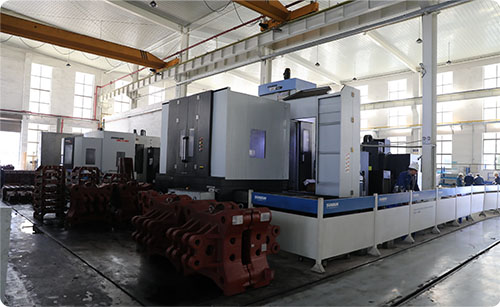
To keep quality stable from batch to batch, key parts are machined on imported equipment.
- DMG turn-mill machining centers (Germany)
- Mazak and Nakamura-Tome machining centers (Japan)
- Doosan machining centers (South Korea)
Strict Inspection and Testing
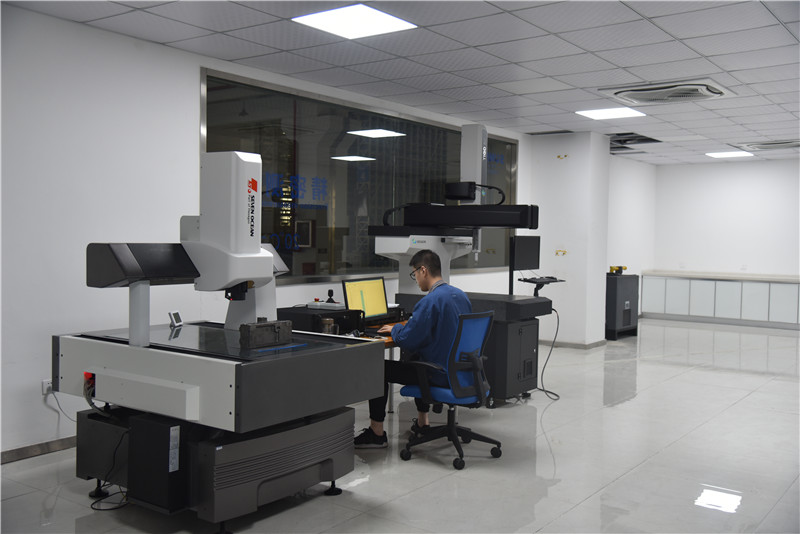
High-precision inspection and metal analysis equipment from Switzerland, the UK, and Japan checks parts before assembly.
- Hexagon coordinate measuring machines
- Mitutoyo cylindricity measuring instruments
- Spectrum analyzer, hardness meter, and large-stroke image measuring machine
Strong R&D Capability
Our hydraulic R&D center is recognized as a provincial-level high-tech enterprise R&D center in Zhejiang. Since 2012, we have also worked with Zhejiang University through a joint hydraulic R&D center.
- 132 R&D staff, including more than 20 with intermediate or senior titles
- 1,500 m² of laboratories
- Multiple technology patents
Quality Management Certifications
Every machine is built under a certified management system. Certificates are available on request.
Factory address: No. 588, 2nd Road, Binhai Zone, Wenzhou, Zhejiang, China
Who We Serve
Our horizontal injection molding machines serve plastic product manufacturers across many industries, from PET packaging and PVC fittings to medical devices and large containers. Buyers in more than 39 countries and regions source machines from our factory in Wenzhou, China.
PET Preform & Beverage Packaging Producers
We help preform producers run high-volume lines with stable, energy-efficient machines.
- Dedicated machines for PET preform production
- Hybrid servo-hydraulic option for high output with low energy consumption
- Center-locking structure for stable clamping in continuous production
- Export-focused service support for overseas production lines
PVC Pipe Fitting Manufacturers
We supply machines designed for pipe fitting production, from small fittings to large ones.
- Machines built specifically for PVC pipe fitting molding
- Wide tonnage range from 140T to 2800T to match different fitting sizes
- Servo energy-saving systems to reduce running costs
- Hydraulic system expertise from the Sunbun Group's core business
Large Container, Bucket & Crate Makers
We provide large-tonnage machines for big, deep-cavity plastic products.
- Large clamping force with a long opening stroke
- Center-locking, material-saving machine design
- Tonnage up to 2800T for large containers and crates
- Hybrid options that cut energy use on long production runs
Medical Device Manufacturers
We support medical component makers with high-precision, clean molding solutions.
- All-electric SE series for high-precision, high-cleanliness applications
- Machines for syringes, eye shields, and safety goggles
- Stable performance for consistent part quality
- Backed by multiple technology patents and national high-tech enterprise status
Cable Tie & High-Speed Product Factories
We help high-output factories keep fast cycles running with reliable machines.
- High-speed machines for cable tie manufacturing
- Fast cycle times for high daily output
- Hybrid servo-hydraulic systems to lower power costs in non-stop production
- Stable hydraulic performance for long running hours
Overseas Importers & Factory Buyers
We help overseas buyers source directly from an experienced Chinese manufacturer.
- Exported to more than 39 countries and regions
- Direct factory supply with competitive Chinese pricing
- Support in choosing the right tonnage and machine type for your product
- Export-focused service and after-sales support
Horizontal vs Vertical Injection Molding Machines: Which One Should You Choose?
The main difference is the direction of the clamping unit. A horizontal machine opens and closes the mold sideways, while a vertical machine does it up and down. This one difference affects floor space, output, automation, and the kind of parts you can make. Here is how they compare.
| Factor | Horizontal Injection Molding Machine | Vertical Injection Molding Machine |
|---|---|---|
| Clamping direction | Mold opens and closes sideways | Mold opens and closes up and down |
| Floor space and height | Larger footprint, lower overall height | Smaller footprint, but taller; needs enough ceiling height |
| Tonnage range | Wide range, from small machines to very large tonnage | Mostly small to medium tonnage |
| Output and cycle speed | Well suited to high-volume, continuous production | Better for smaller batches and specialized jobs |
| Part removal | Parts drop out of the open mold, which suits fully automatic production | Parts usually stay on the lower mold half and may need to be removed manually or by robot |
| Automation and multi-cavity molds | Easy to connect to robots, conveyors, and multi-cavity molds | Possible, but less common in large-scale lines |
| Insert molding | Possible, but inserts can shift when the mold opens | Easier, because gravity holds the inserts in place on the lower mold |
| Typical applications | Packaging, PET preforms, pipe fittings, containers, crates, medical parts, automotive and appliance parts | Cable and connector overmolding, electronic components, small insert parts |
Choose a Horizontal Machine If You Need:
- High output and stable, repeatable production at scale
- Fully automatic operation with robots and conveyors
- Multi-cavity molds for faster production
- Medium to very large clamping force
- Large or deep parts such as containers, buckets, and crates
Choose a Vertical Machine If You Need:
- Insert molding or overmolding of embedded components
- A small footprint on a crowded factory floor
- Small parts with low clamping force requirements
- Smaller production volumes or specialized jobs
Our take: For most plastic product manufacturers, including PET preforms, PVC fittings, packaging, containers, and medical components, a horizontal machine is the standard choice. Sunbun's horizontal range covers clamping forces from 140T to 2800T, with hydraulic, all-electric, and hybrid options. Not sure which type fits your part? Send us your product details and we will recommend the right machine.
Hydraulic, Hybrid or All-Electric? Choosing the Right Drive Type
The drive system decides how much energy your machine uses, how precise it is, and how much it costs to buy and run. Sunbun offers all three types of horizontal injection molding machines, so you can match the machine to your product and budget.
Center-Locking Machines
SK Series · 140T–2800T
Center-locking structure with large clamping force and a long opening stroke. The material-saving design makes it a practical choice for large and deep products.
Best for: Large containers, buckets, crates, and general-purpose production across a wide tonnage range.
Hydraulic + Servo Machines
SK-HYB Series
Combines hydraulic and servo systems to deliver high output with low energy consumption, keeping the power of hydraulics while cutting running costs.
Best for: High-output production where power cost matters, such as packaging and PET preforms.
Servo-Electric Machines
SE Series
Designed for high-precision, high-cleanliness applications. With no hydraulic oil in the clamping and injection system, they suit products that must stay clean and consistent.
Best for: Medical components, electronic parts, and precision products.
Drive Type Comparison
| Factor | Hydraulic (SK) | Hybrid (SK-HYB) | All-Electric (SE) |
|---|---|---|---|
| Energy consumption | Higher than hybrid and electric | Low, thanks to the servo system | Lowest of the three |
| Precision and repeatability | Good for general products | Better control than standard hydraulic | Highest precision |
| Clamping force | Strong, suited to large tonnage | Strong, with high output | Usually used for small to medium tonnage |
| Cleanliness | Uses hydraulic oil | Uses hydraulic oil | Cleaner, no hydraulic oil in the main drive |
| Purchase price | Lowest | Medium | Highest |
| Running cost | Higher power bills | Lower power bills | Lowest power bills |
| Typical applications | Large containers, crates, buckets, general products | Packaging, PET preforms, high-output lines | Medical devices, electronics, precision parts |
Quick guide: Choose hydraulic for large parts and the lowest purchase price, hybrid for high output with lower energy bills, and all-electric when precision and cleanliness matter most. Not sure which one fits? Tell us your product and daily output, and we will recommend the right drive type.
SK Series Horizontal Injection Molding Machine Specifications
The SK series covers 18 models from 140T to 2800T. Use the table below to compare clamping force, platen size, mold height, and shot weight, then pick the model that fits your mold and product. Swipe left or right to see all columns on mobile.
| Model | Clamping ForcekN (tons) | Tie Bar Spacingmm | Mold Strokemm | Mold Heightmin–max, mm | Screw Diametermm | Shot Weight (PS)g | Motor PowerkW | Machine Weighttons |
|---|---|---|---|---|---|---|---|---|
| Small Tonnage (140T–580T) | ||||||||
| SK140 | 1,400 (140T) | 465 × 418 | 430 | 180–460 | 36–45 | 171–267 | 14 | 4.3 |
| SK180 | 1,800 (180T) | 520 × 470 | 490 | 200–545 | 40–50 | 251–393 | 18.5 | 5.6 |
| SK230 | 2,300 (230T) | 580 × 530 | 550 | 220–560 | 45–55 | 347–519 | 22 | 7.2 |
| SK280 | 2,800 (280T) | 660 × 610 | 615 | 240–620 | 50–65 | 490–827 | 30 | 9.3 |
| SK350 | 3,500 (350T) | 713 × 660 | 700 | 330–730 | 60–75 | 835–1,306 | 37 | 13 |
| SK470 | 4,700 (470T) | 765 × 712 | 810 | 330–780 | 65–80 | 1,102–1,669 | 45 | 16.2 |
| SK530 | 5,300 (530T) | 860 × 800 | 880 | 350–820 | 70–85 | 1,452–2,142 | 30 + 22 | 21 |
| SK580 | 5,800 (580T) | 865 × 805 | 850 | 350–850 | 75–90 | 1,668–2,402 | 30 + 30 | 23 |
| Medium Tonnage (650T–1500T) | ||||||||
| SK650 | 6,500 (650T) | 980 × 870 | 960 | 450–1,050 | 85–110 | 2,334–3,908 | 37 + 30 | 26 |
| SK750 | 7,500 (750T) | 1,060 × 960 | 960 | 450–1,050 | 85–110 | 2,334–3,908 | 37 + 30 | 32 |
| SK850 | 8,500 (850T) | 1,120 × 1,030 | 1,100 | 450–1,100 | 90–120 | 2,907–5,166 | 45 + 37 | 38 |
| SK1000 | 10,000 (1000T) | 1,160 × 1,055 | 1,100 | 450–1,100 | 90–120 | 2,907–5,166 | 45 + 37 | 42 |
| SK1200 | 12,000 (1200T) | 1,210 × 1,055 | 1,260 | 400–1,200 | 100–130 | 3,952–6,679 | 45 + 45 | 47 |
| SK1500 | 15,000 (1500T) | 1,460 × 1,320 | 1,500 | 400–1,450 | 110–140 | 4,764–7,719 | 37 × 3 | 80 |
| Large Tonnage (1800T–2800T) | ||||||||
| SK1800 | 18,000 (1800T) | 1,620 × 1,460 | 1,720 | 500–1,500 | 130–160 | 8,455–12,807 | 45 × 3 | 99 |
| SK2200 | 22,000 (2200T) | 1,760 × 1,560 | 2,000 | 750–1,750 | 150–180 | 13,428–19,336 | 37 + 47 × 3 | 140 |
| SK2500 | 25,000 (2500T) | 1,920 × 1,720 | 2,250 | 850–2,000 | 170–220 | 19,106–31,997 | 47 × 4 | 170 |
| SK2800 | 28,000 (2800T) | 2,110 × 1,910 | 2,400 | 950–2,100 | 200–240 | 33,019–47,548 | 47 × 5 | 230 |
Each model offers 3–4 screw options (A–D), so shot weight and injection pressure vary with the screw you choose. Specifications are for reference and may be adjusted without prior notice. Please contact us for the latest data.
Standard Features
- Nitrided-steel, high-efficiency plasticizing screw and barrel
- High-precision electronic ruler control for mold opening and closing, ejection, and injection stroke
- Long mold opening stroke and wide platens to fit large molds
- High-precision low-pressure mold protection
- Hydraulic motor-driven automatic mold height adjustment
- Mechanical, electrical, and hydraulic safety protection; automatic safety gate on SK750 and above
- T-slot platens on machines of 230T and above
Optional Features
- Servo energy-saving system
- Proportional valves for injection and mold movement for faster response
- Special screws for PC, PA, PVC, PET, and bakelite
- Simple or European-standard manipulator interface
- Gas-assist and water-assist injection interfaces, hot runner control device
- Hydraulic or pneumatic core-pulling device
- Matching dryers, dehumidifiers, mold temperature controllers, and auto loaders
How to Choose a Horizontal Injection Molding Machine
Picking the right machine comes down to matching it to your mold and your product. Follow these 6 steps to narrow down the right model before you request a quote.
Calculate the Clamping Force You Need
Clamping force keeps the mold closed against injection pressure. If it is too low, the parts will have flash. To estimate it, multiply the projected area of your part (including runners) by the cavity pressure, then add a safety margin of about 10–20%.
Clamping force (kN) = Projected area (cm²) × Cavity pressure (MPa) ÷ 10
Cavity pressure depends on the resin and the part. As a rough guide, general products need about 30–50 MPa, while thin-wall parts and hard-to-flow resins need more. If you have several cavities, add up the projected area of all of them.
Check the Shot Weight
The machine must be able to inject enough material for one shot, which is the weight of all parts plus runners. A common rule of thumb is to keep one shot between roughly 20% and 80% of the machine's rated shot weight. Too small a shot leaves material sitting in the barrel too long, and too large a shot leaves no safety margin.
The shot weights in our specification table are rated in PS (polystyrene). Other materials such as PP, PVC, or PET will give different values, so ask us to confirm for your resin.
Make Sure the Mold Fits the Machine
Even if the tonnage is right, the mold must physically fit. Compare your mold with these three figures in the specification table:
- Tie bar spacing: the mold must fit between the tie bars
- Mold height (min–max): your mold thickness must fall within this range
- Mold stroke: it must be long enough to open the mold and take the part out. Deep parts such as buckets and bins need a longer stroke
SK series machines have a long mold opening stroke and wide platens, which is why they suit large molds and deep-cavity products.
Choose the Drive Type
Decide between hydraulic, hybrid, and all-electric based on your product and running costs. Hydraulic machines suit large parts and a lower purchase price. Hybrid machines cut energy use in high-output production. All-electric machines give the highest precision and cleanliness for medical and electronic parts. See the drive type comparison above for details.
Plan for Automation and Auxiliary Equipment
Think about how parts will be removed and how material will be fed. Check whether you need a manipulator interface, dryer, dehumidifier, mold temperature controller, or automatic loader. If you plan to add a robot or special features such as gas-assist injection or core pulling, tell the supplier early so the machine is configured correctly from the start.
Evaluate the Supplier, Not Just the Machine
A machine is a long-term investment, so look beyond the price. Ask about warranty, spare parts supply, installation and training, and how quickly the supplier can respond to your questions. Check their export experience, certifications, and the brand of key components such as the hydraulic system and controller.
Example: Choosing a Machine for a Household Product
Suppose your mold has a total projected area of 400 cm² (parts and runners) and uses a cavity pressure of 40 MPa. The clamping force is 400 × 40 ÷ 10 = 1,600 kN. Adding a 15% margin gives about 1,840 kN.
The SK180 (1,800 kN) falls just short, so the next size up, the SK230 (2,300 kN), is the better choice. If one shot weighs about 250 g, the SK230's smallest screw (347 g PS) puts the shot at around 72% of capacity, which is within the recommended range. Finally, check that your mold fits within the SK230's 580 × 530 mm tie bar spacing and its 220–560 mm mold height range.
Not Sure Which Model to Choose?
Send us the following details and our engineers will recommend a suitable machine.
- Product drawing or photo
- Material to be molded
- Part weight and number of cavities
- Mold dimensions (length, width, thickness)
- Target cycle time or daily output
- Local voltage and frequency
Horizontal Injection Molding Machine FAQs
Quick answers to the questions buyers ask most often about horizontal injection molding machines.
What tonnage range do your horizontal injection molding machines cover?
The Sunbun SK series covers clamping forces from 140T to 2800T (1,400 kN to 28,000 kN) in 18 models, from SK140 to SK2800. Each model offers several screw options, with a rated shot weight from 171 g to 47,548 g in PS, so you can match the machine to small household parts or very large containers.
How do I calculate the clamping force I need?
Multiply the projected area of your part and runners in cm² by the cavity pressure in MPa, then divide by 10 to get the clamping force in kN. Add a safety margin of about 10% to 20%. For example, 400 cm² at 40 MPa needs 1,600 kN, or about 1,840 kN with a 15% margin, so a 2,300 kN machine such as the SK230 is a suitable choice. Cavity pressure depends on the resin and the part, so ask us to confirm for your product.
What products can be made on your horizontal injection molding machines?
Our horizontal machines are used for automotive interior and exterior parts, plastic pipe fittings, home appliances, toys, deep-cavity household products such as trash cans, medical products, shoe materials, and cosmetic cases. We also build application-specific machines for PET preforms, PVC pipe fittings, large containers and crates, medical devices, and high-speed cable ties.
What materials can your horizontal injection molding machines process?
Standard screws handle common thermoplastics. For materials such as PC, PA, PVC, PET, and bakelite, special plasticizing screws are available as an option. Tell us your resin and we will confirm the right screw and the shot weight for your material, since the shot weights in our specification table are rated in PS.
Can the machine be connected to robots and auxiliary equipment?
Yes. We offer simple and European-standard manipulator interfaces, and we can supply matching dryers, dehumidifiers, mold temperature controllers, automatic loaders, and pulverizers. Other options include gas-assist and water-assist injection interfaces, hot runner control, and hydraulic or pneumatic core pulling. Tell us your automation plan early so the machine is configured correctly.
How much does a horizontal injection molding machine cost?
The price depends on the tonnage, drive type, screw choice, controller and hydraulic components, auxiliary equipment, and shipping to your port. Because each configuration is different, we quote based on your product and mold details. Send us your requirements and we will prepare a quotation for the right model.